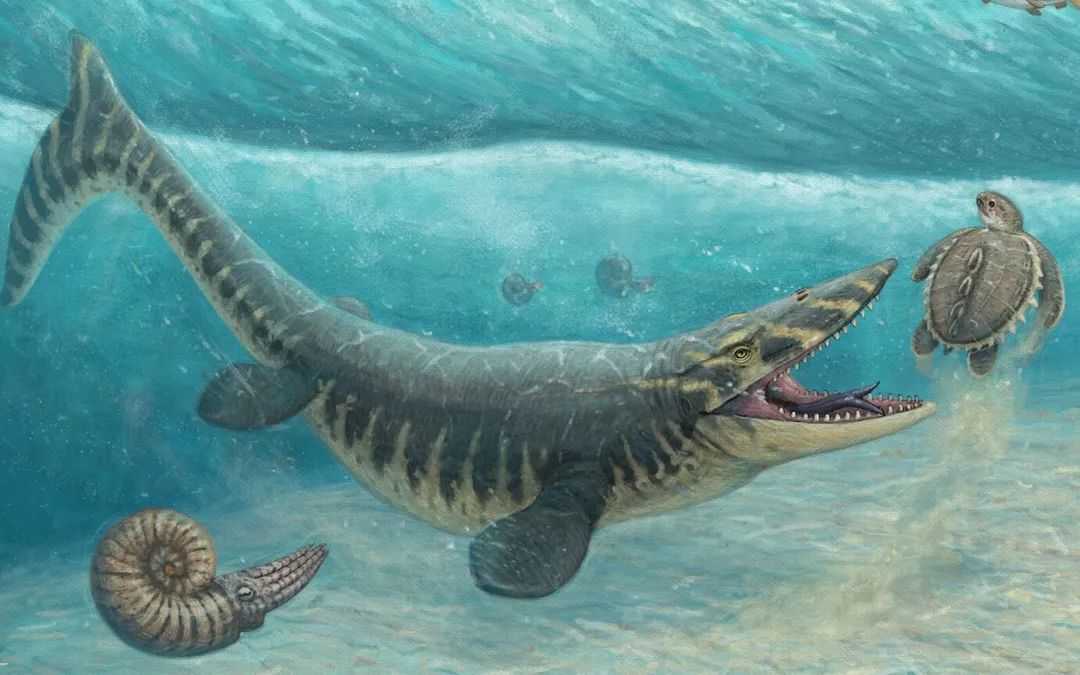
Tylosaurus’s body was a marvel of evolutionary design for marine dominance. Resembling an oversized lizard adapted for water, it featured a flattened, paddle-like tail that generated immense thrust, enabling it to chase prey at surprising speeds through the Cretaceous waters. Four massive flippers provided exceptional maneuverability, allowing quick turns and sudden bursts of acceleration. Its head, meanwhile, was a formidable weapon: akin to a crocodile’s, it housed a jaw with crushing bite force, complemented by dagger-like teeth each the length of a human hand, perfectly evolved to puncture and subdue even the toughest marine creatures.
As the ultimate predator of its era, Tylosaurus preyed on a diverse range of marine life, including large fish, sharks, and even other mosasaurs. Fossil evidence reveals healed bite marks on some specimens, suggesting aggressive territorial disputes or battles with equally massive rivals. Its reign came to an end with the Cretaceous-Paleogene extinction event, but its legacy lives on in the fossil record, offering scientists invaluable insights into prehistoric marine ecosystems. Often dubbed the "tyrant lizard of the sea," Tylosaurus remains a testament to the awe-inspiring power and grandeur of Earth’s ancient creatures, a reminder of the fierce competition that shaped life in the planet’s distant past.