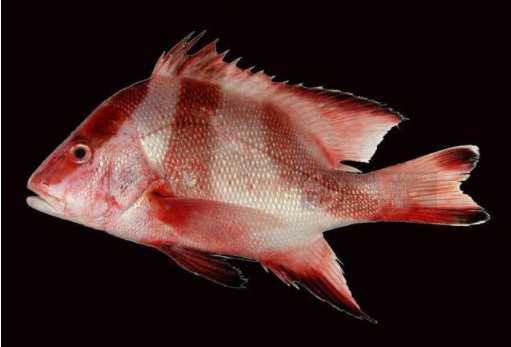
Inhabiting coral reefs, sandy-muddy bottoms, and even mangrove estuaries, Lutjanus sebae can be found at depths ranging from 5 to 180 meters across the Indo-Pacific region. Juveniles often seek shelter among sea urchin spines or in the brackish waters of mangrove-lined estuaries, while adults prefer deeper reef structures or open seabeds. As a carnivorous predator, it feeds primarily on fish, shrimp, and other crustaceans, using its sharp teeth and powerful jaws to ambush prey in both reef and soft-sediment habitats.
The species’ range extends from the Red Sea and the eastern coast of Africa to New Caledonia, encompassing northern Australia and southern Japan. In China, it is distributed in the South China Sea, the southern East China Sea, and the coastal waters of Taiwan, including the Penghu Islands. While currently listed as "Least Concern" on the IUCN Red List, Lutjanus sebae faces threats from overfishing, particularly in regions where it is targeted for its firm, flavorful flesh. Destructive fishing practices and coral reef degradation further compromise its habitat. As a key species in reef ecosystems, it plays a role in controlling prey populations and supporting biodiversity. Conservation efforts, including the establishment of marine protected areas and sustainable fishing guidelines, are vital to preserving this iconic snapper and the health of its tropical and subtropical habitats.