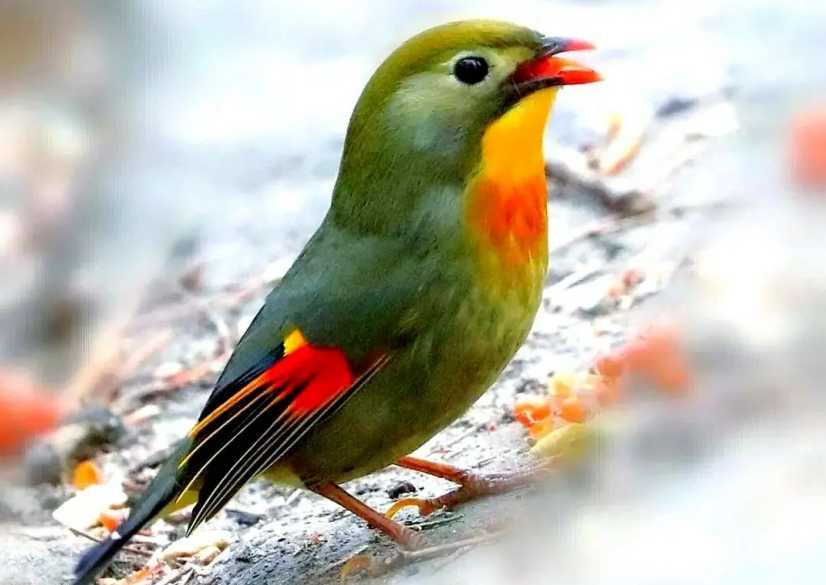
The leiothrix’s plumage is a study in subtle elegance: a scarlet bill contrasts with olive-green upperparts, while the underbelly glows in bright orange-yellow. "In flight, they’re like living embers dancing through bamboo groves," notes ornithologist Dr. Chen Wei. This color palette, while less flamboyant than tropical peers, serves as perfect camouflage in subtropical forests—until their calls give away their presence.
Native to mountainous regions from Sichuan to Fujian, these birds thrive in mixed flocks, though pairs maintain a tight bond. "They preen each other constantly, a behavior that reinforces social ties," says avian biologist Dr. Li Jia. In the wild, their songs act as territorial markers, but in captivity, breeders prize their melodious trills, which can include up to 10 distinct notes.
Once exported in large numbers for the caged bird trade, wild populations now benefit from conservation efforts in China’s nature reserves. "Witnessing a pair forage together, their red bills bobbing in unison, you understand why they symbolize love," says wildlife photographer Zhang Lin. "In Chinese poetry, their calls are said to echo the longing of separated lovers—a beautiful metaphor for a bird that truly seems to embody companionship."
Today, the red-billed leiothrix remains a beloved figure in both art and ecology, its presence signaling healthy forest ecosystems. "It’s a reminder that beauty in nature can be found in simplicity," adds Chen. "Those soft olive greens and warm oranges, paired with that striking red bill—nature’s way of proving that subtlety can be just as captivating as extravagance. For centuries, this little bird has sung its way into Chinese hearts, a living symbol of love, harmony, and the quiet magic of the forest."