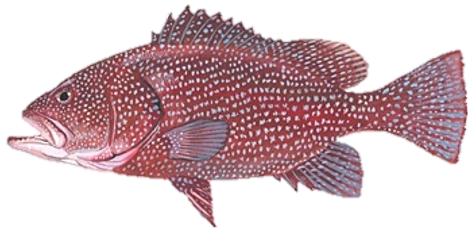
The giant grouper's body is robust and elongated, adorned with a pattern of irregular, light-colored spots against a dark brown or grayish background, resembling a camouflage that blends seamlessly with the coral reefs and rocky seabeds it calls home. Its broad head and powerful jaws are equipped with sharp teeth, allowing it to prey on a variety of marine life, from smaller fish and crustaceans to octopuses. Despite its formidable hunting abilities, the giant grouper is generally a solitary and slow-moving predator, relying on ambush tactics rather than speed to capture its prey.
Once abundant across the tropical and subtropical waters of the Indian and Pacific Oceans, the giant grouper now faces significant threats due to overfishing and habitat destruction. Its slow reproductive rate, with females taking up to 5 years to reach sexual maturity, makes it particularly vulnerable to population decline. Conservation efforts, including fishing regulations and marine protected areas, aim to safeguard this majestic species. As a keystone species in coral reef ecosystems, the giant grouper plays a crucial role in maintaining the balance of marine life, making its preservation essential for the health of the oceans. Its story serves as a poignant reminder of the delicate relationship between human activities and the survival of Earth’s most magnificent creatures.