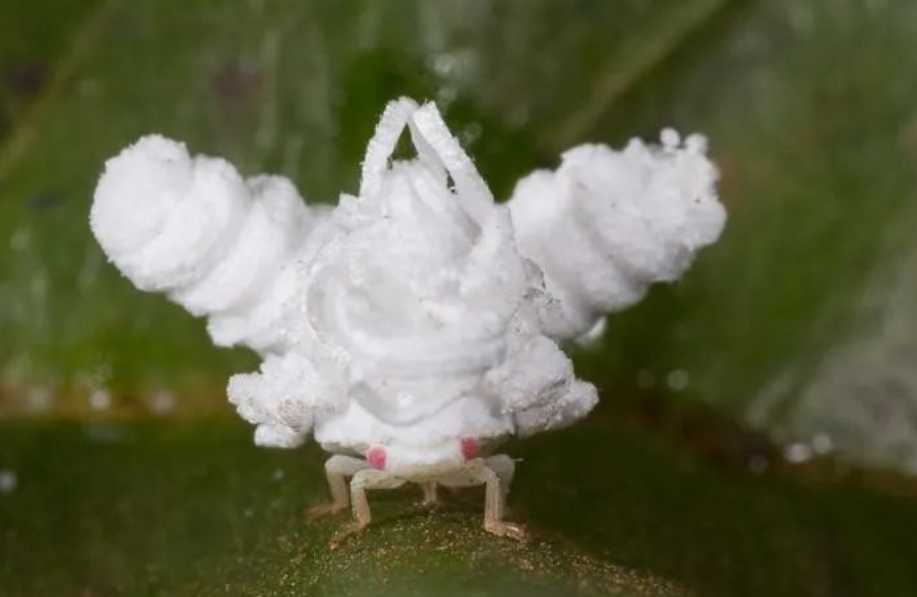
Measuring 5–8 mm, the planthopper nymph is encased in a waxy secretion resembling popped corn. Produced by abdominal glands, this coating mimics inedible bird droppings to deter predators and insulates against moisture loss. When threatened, it launches into short, erratic flights, its white wax particles catching light to mimic floating popcorn.
Beneath the wax, its pale yellow or green body matches young plant stems. Adapted legs cling to leaves, while antennae detect approaching threats. Unusually for nymphs, it develops rudimentary wing pads early, enabling aerial escapes—rare in its family.
Native to Ecuador’s Mindo-Nambillo reserve, the popcorn bug feeds on plant sap with piercing mouthparts. Its wax secretion traps beneficial bacteria for digestion. Females lay eggs under leaves, coating them in wax to fend off fungi.
Though not endangered, it faces risks from deforestation and pesticides. Scientists study its wax glands for biomimicry, seeking to replicate their water-repellent properties. For locals, it symbolizes cloud forest biodiversity, fueling eco-tourism that balances conservation with community needs.
In Ecuador’s misty canopies, this insect proves nature’s survival tactics come in unexpected forms. Like living popcorn, the planthopper nymph reminds us that even tiny creatures hold secrets worth protecting in Earth’s fragile ecosystems.