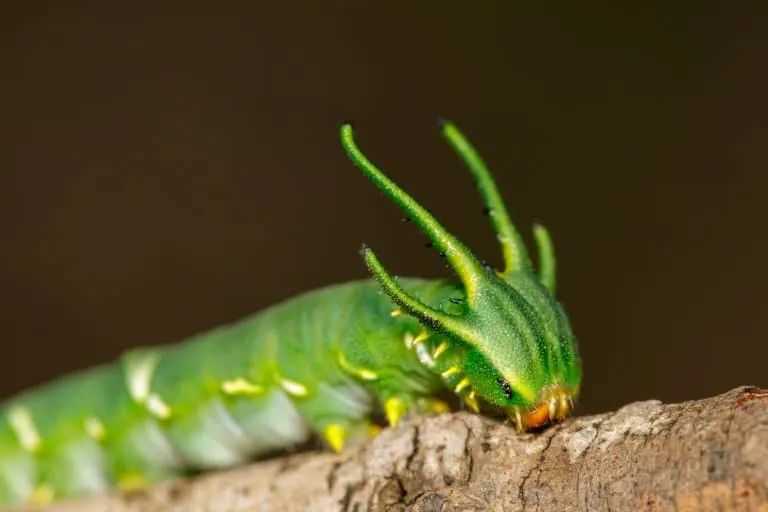
The caterpillar’s most iconic trait is a bulbous, eye-spotted anterior segment that inflates into a "dragon head" when threatened. Rearing up, it reveals bold yellow or orange patterns, waving its actual (smaller) head beneath to confuse birds. This automimicry diverts attacks from vital areas, while its green/brown body with diagonal white stripes offers camouflage among leaves.
Species like Ceratomia amyntor (hickory horned devil) or Manduca quinquemaculata (tomato hornworm) exemplify this trait, though younger instars display the most pronounced "dragon head." Growing to 8 cm, it feeds on tomatoes, tobacco, and trees, thriving in gardens, forests, and farmlands.
Despite its fearsome look, the caterpillar is harmless to humans—lacking stingers or venom—and plays a vital role as prey for parasitic wasps and birds. Its abundance highlights a biological paradox: spectacular traits often evolve in widespread species to maximize survival. As it pupates into an unassuming moth, this larva reminds us that nature’s most dramatic designs often hide in plain sight.