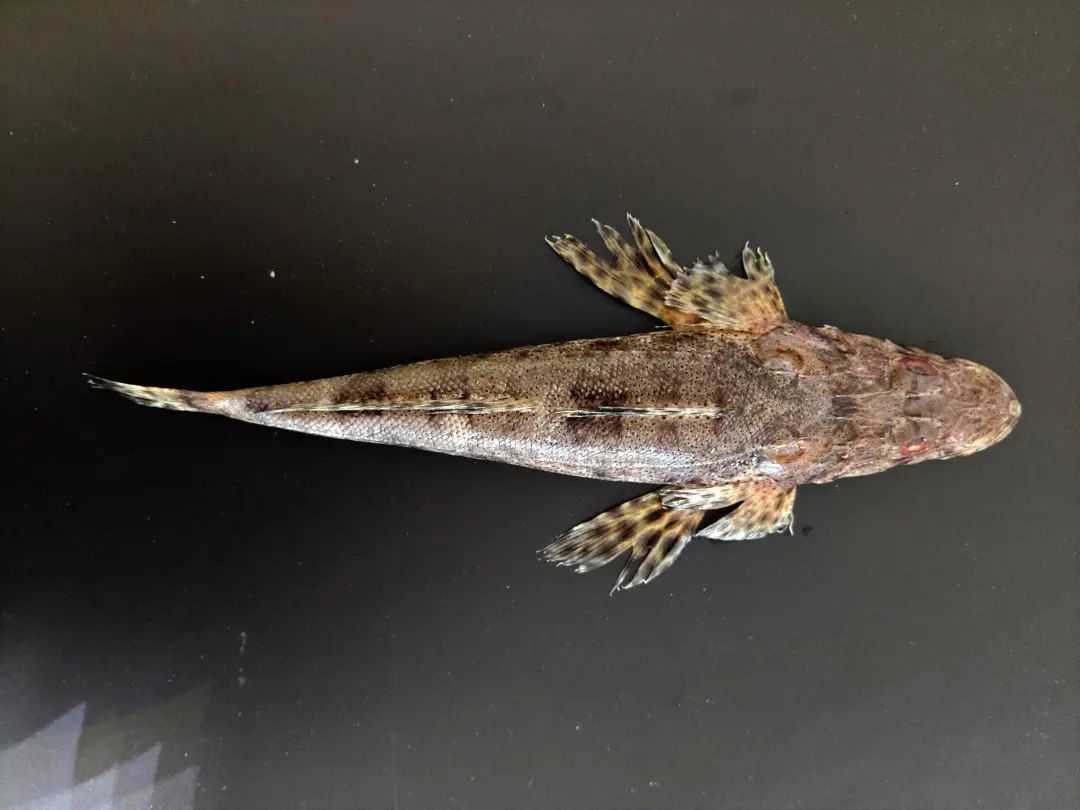
The Indian flathead showcases a robust, elongated body that can grow up to 60 centimeters in length. Its most distinctive feature is the flattened head, broad and angular, equipped with a pair of large, upward-facing eyes that provide excellent vision for spotting prey from below. The body is covered in rough, mottled scales that blend seamlessly with sandy or muddy seabeds, ranging in color from brown to olive with darker patches. But its most fearsome trait lies in the sharp, venomous spine on its dorsal fin. This spine, which can pierce through gloves and skin, serves as a potent defense against predators and accidental encounters with humans, delivering a painful sting.
In its natural habitat, Platycephalus indicus is a bottom-dwelling predator. It lies motionless on the seabed, partially buried in sand or mud, using its camouflage to ambush unsuspecting prey. Its diet mainly consists of small fish, crustaceans, and cephalopods. When potential prey swims overhead, the flathead strikes with lightning speed, opening its wide mouth to engulf the victim. This ambush hunting strategy, combined with its excellent camouflage, makes it a highly efficient predator in shallow coastal waters, estuaries, and bays.
Despite its adaptability, the Indian flathead faces threats from overfishing, as it is highly sought after for its firm, white flesh in seafood markets. Additionally, habitat degradation due to coastal development, pollution, and trawling activities damages the seabed environments it depends on. Conservation measures, including fishing regulations and the protection of critical habitats, are essential to ensure the long-term survival of this unique species. As a vital part of the marine food web, Platycephalus indicus plays a crucial role in maintaining the balance of coastal ecosystems, highlighting the importance of preserving its habitats.